Blog
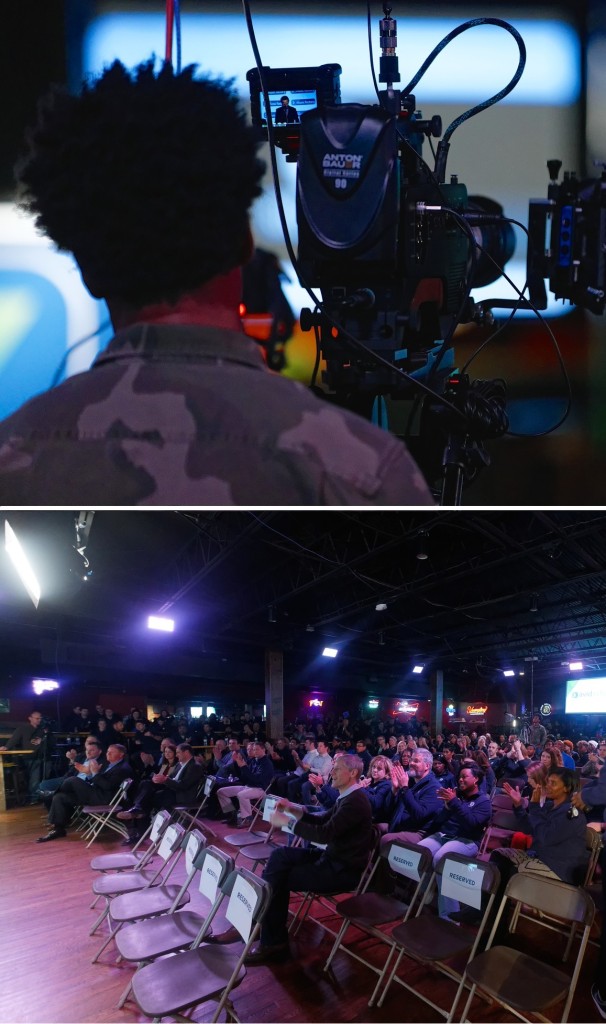
Someone in your company pops up and says you need to host a press conference this year. Now what? Don’t fret; I’ve outlined below the essentials of a successful press conference. I beg of you to ask yourself one question before even starting. Is the news worthy of a press conference? Is what you’re announcing really an announcement? And will you be offering something that the media can only get at that time (e.g., an important speaker or visual)? If the answer is “yes,” then you’re ready to start planning. If not, perhaps consider strategic media pitching of the news instead.
PREPARATION IS KEY
- The Invite: You need a brief, engaging piece (a media advisory) that states: what, who, when, where and why. Be sure you just tease the information and leave the reporter wanting more. Giving away too much information will of course eliminate the need for the journalist to leave their office!
- More “Meat” to the Story: Do you need to create a full press kit or will a press release suffice? You’ll at least want to draft a press release that contains the pertinent details; provide this (and any photos) to journalists after the press conference has concluded.
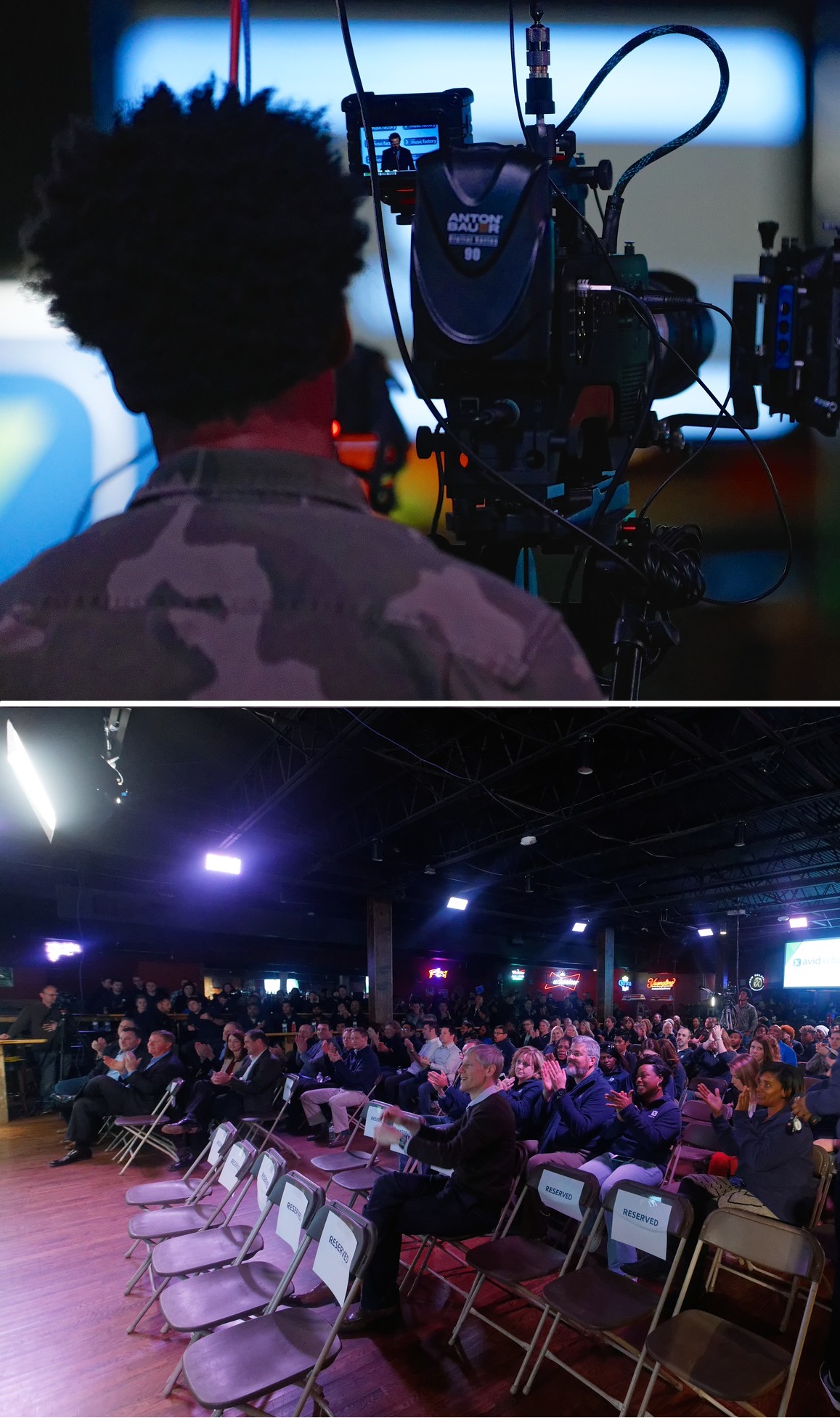
- The Visual Story: Be sure you have backdrops, signage and props that tell “the story” without any words or captions necessary. Remember: a press conference is an event and an event is visual. Giant scissors for a ribbon cutting? Branded hardhats for a ground-breaking? Check and check.
THE DEVIL IS IN THE DETAILS
- Day of the Week: On Mondays, journalists are busy catching up on the weekend’s top news stories (and maybe they aren’t in the office on Sunday for a reminder from you). On Friday afternoons, they’re usually wrapping up for the week and planning weekend stories.
- Tick Tock: Consider deadlines for morning, midday and evening news. If you hold a press conference at 4 p.m., journalists are going to be really pressed given their deadlines for the 5 or 5:30 p.m. news. A morning or midday press conference will give journalists time to write/package the story that day, getting you MORE coverage.
- Location, Location, Location: Your location should serve as a visual extension of your announcement. Does your location link to/represent your announcement? Make sure there’s good lighting and ample space for both speakers and media personnel plus their equipment.
REIGN IN THE RAMBLERS
- Keep it Short. A journalist’s time is valuable. They want to get the story and get out. A mere 2-3 minutes per speaker is ideal.
- Narrow it Down. It’s not necessary to have the entire C-suite speak on one topic (although they may want to). Instead, stick to 1-2 executives who represent the organization well and (if possible) one dignitary or community leader.
- Talking Points. Be sure your speakers aren’t only equipped with their speeches during the press conference, but also prepared to answer questions from the media afterwards.
It may not always be possible to control every detail of a press conference, but it’s important to control the elements you can to make up for the uncertainties. Still feeling overwhelmed? Not a problem. You’ve got experts right at your fingertips. Pivot PR is here to make your next press conference a success.

Blog
As we enter the holiday season, I thought now would be a great time to address “corporate” giving. Many organizations have the best intentions to support their community, but not always sure how to make the biggest impact. I’m providing three tips that your business may consider when choosing a charity to make the process as easy as shopping for your family and friends.
1. Give to Those Who Matter to You
You wouldn’t normally give a gift to someone across town that you don’t know, right? Take into consideration what you and your employees care about and if the organization’s mission aligns well with your business. You’ll feel better about it and be more engaged with what you’re doing.
2. It’s Not How Much You Spend
Like me, I’m sure when you’re shopping you take actual cost into consideration, but what’s more important is making sure it’s something they value. By donating things like your time, expertise, connections and passion you may be able to make a bigger contribution than you think. It’s not always about a large financial contribution or sponsorship from you alone.
3. Tell the Rest of the Family
When I give mom that bracelet she always wanted I make sure my dad and brother know about it! Many businesses do not like to highlight their community relation efforts for fear of bragging. Nonsense! By showing that your organization is a good community steward, and getting others involved, you are also bringing awareness to the charity, which will only encourage others to give; win-win!
BONUS: Here is an opportunity for you and your executives to put these tips to good use. I will be participating in the Queen City Corporate Challenge, and if this is a good opportunity for you company, I would be honored if you joined me. Please let me know if you’re interested.
Hospitality House of Charlotte is a unique organization that provides the comforts of home for families of seriously ill loved ones by offering affordable accommodations in the heart of Charlotte’s medical community. Learn more about the Queen City Corporate Challenge here: http://www.firstgiving.com/29382/2016-queen-city-corporate-challenge.
Blog
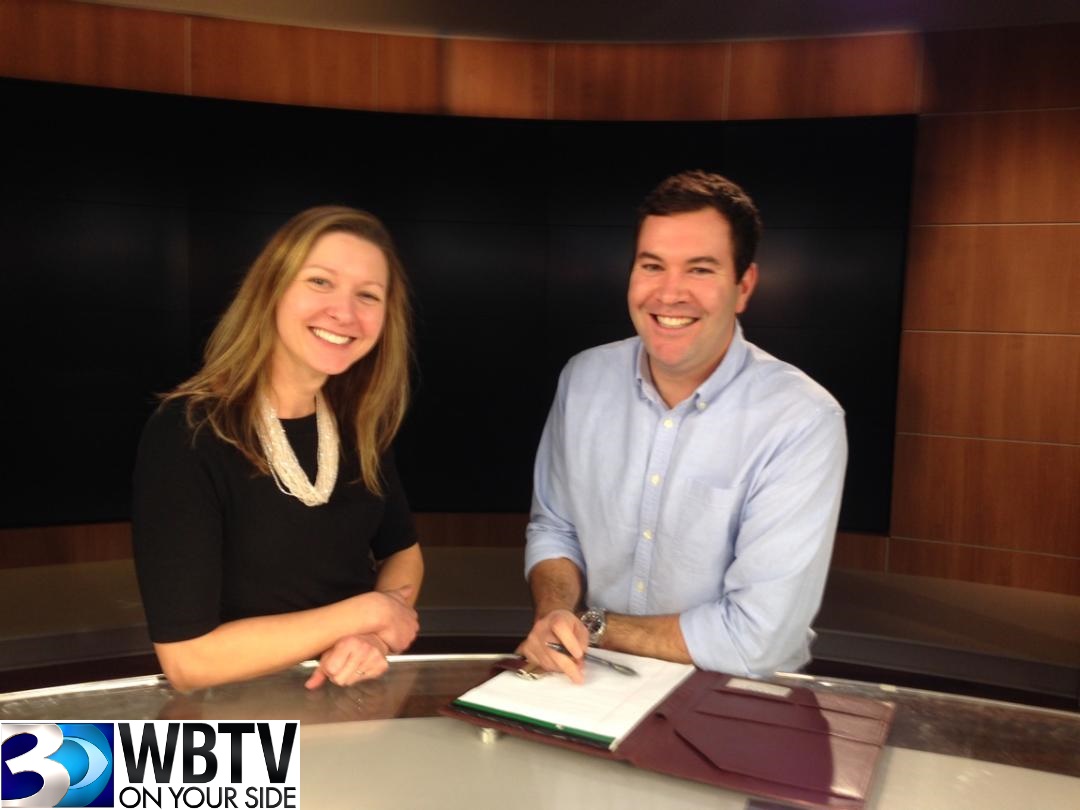
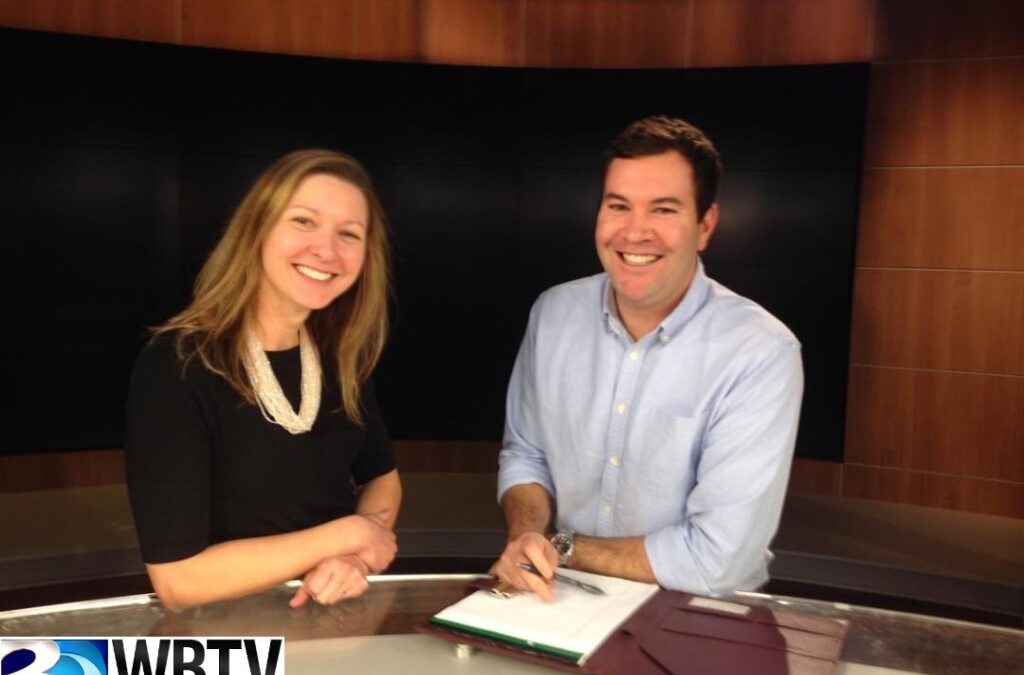
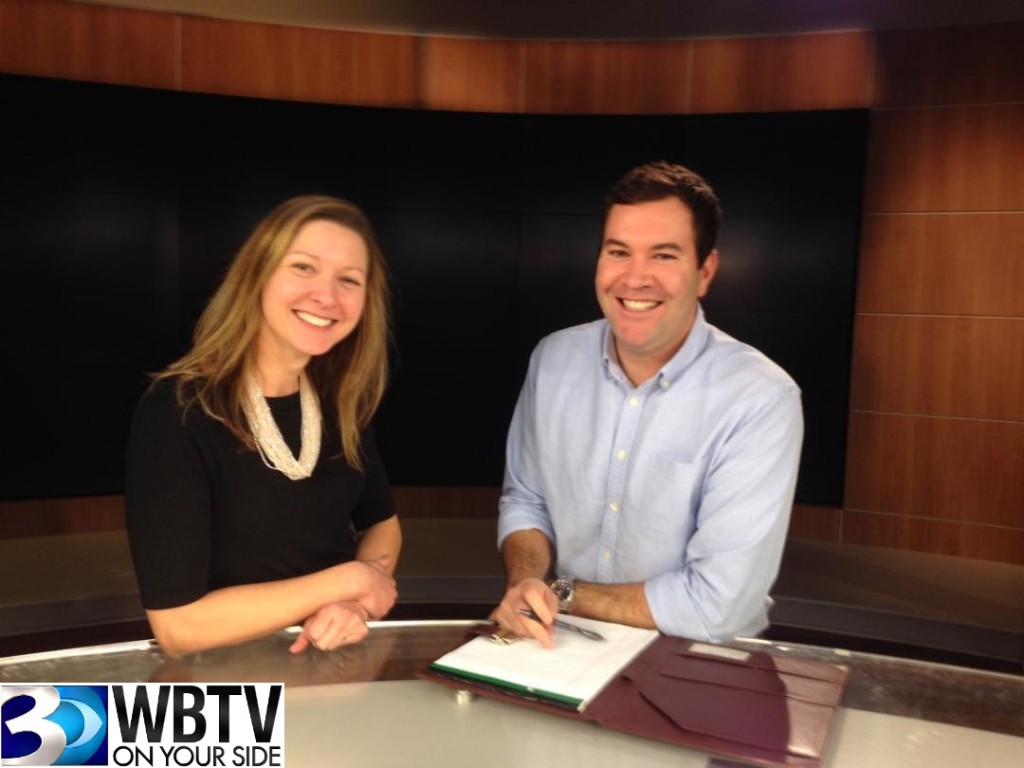 I recently had a chance to sit down with my long-time friend and former colleague Katie McKiever, who is now the Social Media Manager at WBTV (the local CBS affiliate). We all think about anchors and reporters at news stations but do you also consider those behind the scenes as well? What about the marketing and communication staff? I wanted to take a peek behind the curtain to see how Katie and her colleagues help WBTV be “on your side.” Spoiler alert: she offers some great pitching tips too (so be sure to make it to the end).
Q: Katie! It’s been years since we last sat in a newsroom together as Business Wire employees. Your role here is much different from what it was back then; tell me about it.
A: I love this job! As the social media manager I’m a part of the digital department, but I support three distinct areas–marketing, digital and TV.
Q: I think our readers understand TV and digital, but explain how you support marketing.
A: We ourselves are a brand. Of course our viewers are looking for the news that we cover, but we’ve got to make sure to do a good job of bringing awareness to WBTV too — whether that’s promoting one of our shows or anchors. It’s an interesting side to the job that most don’t necessarily think of.
Q: How do you differentiate yourself from other Charlotte TV stations from a social perspective?
A: Of course they’re doing social too, but what I think sets us apart is our voice. There may be similarities in the channels we use (Facebook, Twitter, Instagram and Pinterest) but it’s how we speak to and resonate with our audience.
Q: Are you in charge of all employee channels or just the WBTV News and @KatieMcKiever?
A: Our anchors, reporters and everyone else handle their own social accounts, but I’m here for guidance, coaching, providing updated information on how to use things like Twitter Polls, the appropriate timing to post, etc. I help them to be more strategic.
Q: Can people pitch you directly or does it have to go through others in the newsroom first?
A: Yes. Definitely pitch me! Sometimes I get information that I know won’t be a good fit for TV, but I know it will be well received from our social media followers and website audience. I get pitched all the time and I can send it to the right producers that might end up running with it on TV. Just depends on the news. Sometimes it’s right for social, sometimes our website and sometimes TV. I’ve developed a good feel for where things should be placed.
Q: Tell me the value of digital and how it has grown.
A: We can include so much more content on our website and social channels than we ever could on TV. Because we’re a TV station first, our digital platforms are sometimes considered secondary, but we have a large digital audience that continues to grow. The great thing about digital is that a lot of it is trackable. We have hard numbers and analytics behind every platform. It’s nice how our website and social channels feed off of each other; a good chunk of our website traffic comes from our social media.
Q: I see you recently created a hashtag #WBTVandME. Tell me more about it.
A: We created #WBTVandME as a way to connect with the community. People can use that hashtag when they’re out and about, especially at events, when they want to share something visual with us. Not only does it serve as a platform for us to share, but people can use it to pitch us as well! We may pick it up on our website or in a newscast too. It’s a great way for people to connect with us and vice versa.
Q: Do you ever do just social posts or does it have to tie to a digital story?
A: Sometimes we’ll post things just on social, but for the most part we’ll lead them back to a digital story.
Q: Is there anything else you’d like to share with the average PR, marketing or small business owner in Charlotte?
A: I can’t tell you how many times I’ve had to ask people for pictures. Please send at least one picture with your pitch especially if it’s a pitch to a digital/social reporter. Even if it’s just a logo or an event flier, I’ll take it. The more pictures the merrier! We do not like to post stories on our social media channels or our website without a photo and/or video. So send me as much as possible. Don’t forget to include your social handles on things like news releases. Get creative with your subject lines. Use a compelling quote! Grab my attention and make me want more. There’s a fine line between teasing a reporter and getting their attention or just being silly.
Q: What’s your favorite part of the job?
A: I love all the Charlotte-centric information and how much everyone here loves Charlotte and this community. Sometimes I think the media gets a bad reputation, but I think WBTV does a great job of knowing when to draw the line and when not to get too flashy or sensationalize things. There’s a magic to television that’s still really fun. I catch myself watching in awe all the time.
A big thanks to Katie for talking with me. We encourage you to connect with her and WBTV on the following social channels:
Twitter: @KatieMcKiever
Instagram: @KatieMcKiever
WBTV: http://www.wbtv.com/
WBTV Facebook: https://www.facebook.com/wbtvnews3
WBTV Twitter: @WBTV_News
WBTV Instagram: @WVTV_News
Blog
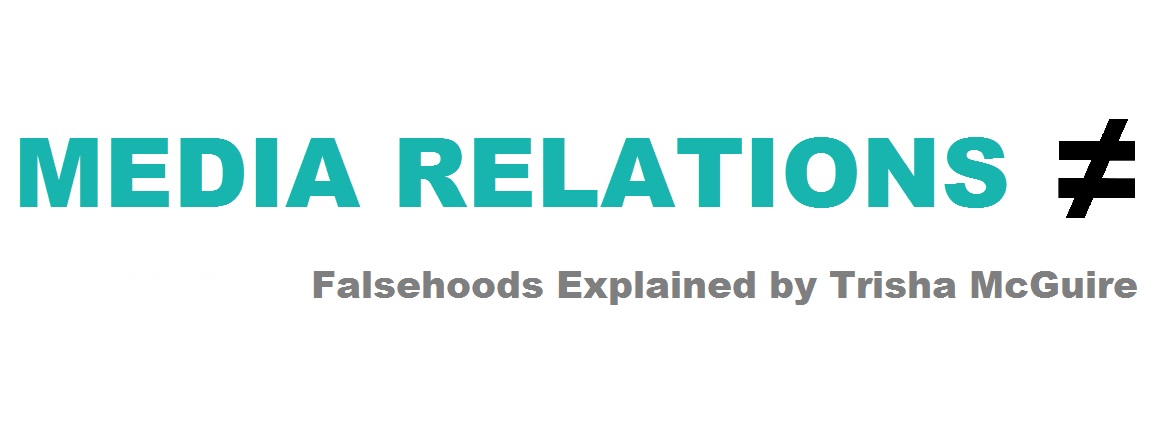
To many, media relations is as perplexing as complex algorithms. Some are so skeptical, they view practitioners as snake oil salespeople. To demystify the practice, let’s walk through some common misperceptions. To first ground us, let’s start with a definition. Per Wikipedia, “Media relations involves working with media for the purpose of informing the public of an organization’s mission, policies and practices in a positive, consistent and credible manner.” Now on to what media relations does not equal …
Media Relations ≠Public Relations
The Public Relations Society of America describes public relations as “… a strategic communication process that builds mutually beneficial relationships between organizations and their publics.” Public relations is comprised of several areas, such as the following: community relations, employee relations, event promotion, investor relations and public affairs. Content creation, sponsorships and speaking engagements can also fall in the realm of public relations. The bottom line: public relations is not just media relations. It’s much more.
Media Relations ≠ Advertising
By pitching a story idea to the media, practitioners are able to secure earned media. The earned media could be a print or online article, TV or radio interview/segment or a blog post. This earned media is not an advertisement. An advertisement is paid for by the company or brand and guaranteed. The beauty of media relations is the third party credibility conveyed to your company. Ask yourself: do you put more stock in flashy advertisements or an article you read from a credible news source? However, coverage secured via media relations is not guaranteed as it is at the discretion of the reporter and/or editor regarding if, when and how the news is covered.
Media Relations ≠Free
This is where folks get confused. Per my section above, earned media isn’t paid media. In fact, don’t ever offer journalists money. But, the myriad tactics required to secure earned media aren’t free. Sound media relations requires strategic thinking, creative ideas, outreach and follow-up – all of this takes time. Lots of time. And time in media relations is how practitioners earn a living. Also, there are many tactics such as media tours, mailings, spokesperson out-of-pocket costs, media events, etc. that may be costly. In short, you don’t pay for the placement itself but the work that goes into securing the placement. With the exorbitant cost of advertising, you almost always come out ahead with media relations (and the credibility factor is honestly priceless).
Media Relations ≠ Press Release
A press release is one vehicle to inform the media of company news (e.g., a new product, an event, an opening, etc.). However, a well-crafted media relations strategy should include a pitch angle to accompany the press release that gives the journalist you are pitching context and/or the “so what” to the news and/or information that places your company’s news within a larger story. Some of my best media placements have been secured without a press release at all, but rather a crafty [email] pitch letter. Side note: Creating a press release when there isn’t news or simply posting a press release on a wire site (unless you’re just doing it for web reasons) will not earn your company quality news placements.
Now that you understand the “equation” of media relations (media relations = awareness and credibility for your brand or company), I hope you reach out to the team here at Pivot PR when you need some strategic media relations support!
Blog
A recent survey by the Consumer Executive Board (CEB) of 1,900 corporate decision makers found that buyers are, at a minimum, 57 percent of the way through the buying process before they contact a potential supplier. Some respondents reported being as much as 70 percent complete with the decision-making process before reaching out to a vendor.[1] What does this mean for you? If your company is one that continues to solely pump out case studies and product literature, you’re missing your opportunity to actually influence and/or connect with your buyer. Yes – we live in a culture of “selfie” photos and can even subconsciously become focused on ourselves, our products and our business. To survive, you must be buyer-centric versus company-centric. (To really make my point, let me ask you this — do you unfollow the person that exclusively posts selfies?)
There are multiple guides, books and webinars out there that detail how to map the buyer journey and then align content and communications channels with that journey. There isn’t enough room in this blog to detail the full process. But, I hope this post can serve as a catalyst for you to explore your content strategy. Here’s your gut check. I’ve included below a couple of examples of the type of content that would be appropriate for each phase of the buyer journey. Keep in mind that the vehicles can cross over between phases; this is just a loose guide. Do you have any content listed in the awareness and consideration phases below? If your answer is “no” or “sort of,” please take action ASAP. If you’re already well on your way but are struggling with content ideas, check out Buzzsumo to see what content is trending for a topic or domain.
Awareness
- Ebook
- White paper
- Editorial article
- Email newsletter
Consideration
- Webinar
- White paper (solution comparison)
- Podcast
- Video
Preference/Decision
- Vendor/product comparison
- Case study
- Trial/software download
- Product literature
It’s okay to have some “selfies”; just be sure to insert some group, community or lifestyle photos too. The good news is that there are plenty of resources out there to guide you through this process. And, even better news, your friends at Pivot PR do somersaults of excitement over this entire process – from buyer persona creation and buyer journey mapping all the way down to creating the content. Always feel free to reach out for our help.
[1] http://www.salesandmarketing.com/content/mapping-buyer%E2%80%99s-journey